
From the Principal's Desk
Once the capital of Gauda Kingdom of legendary King Shashanka at Karnasuvarna (Karna; the central figure in the ancient Indian epic The Mahabharata and suvarna; the gold); near modern Rangamati in present day Murshidabad nestled on the eastern banks of the Bhagirathi River; the agrarian hinterland in the early 7th century CE and then after Shashanka's death around 637 CE, Karnasuvarna briefly fell to King Bhaskaravarman of Kamarupa and later King Jayanaga. A settlement named Maksudabad grew in the region, linked traditionally to the 16th century Mughal expansion. In the year 1704, Nawab Murshid Quli Khan named the place as Murshidabad in his own name. The place has undergone immense cultural and historical changes. Under the independent Nawabs of Bengal (including Alivardi Khan), the city rivaled London in size and wealth due to its booming silk trade produced by skilled artisans, banking houses like Jagat Seth; known as the “Banker of the World”, and massive textile production including shipbuilding and other crafts like terracotta art, and gold embroidery. Murshidabad was fondly called the “Rothschild of India”. However, after the British victory in the Battle of Plassey in 1757, Murshidabad’s prominence declined and the rich history gradually faded out. Murshidabad; that was once a shining example of cosmopolitan glamour, a place where cultures mixed freely and trade thrived, business boomed and has become the forgotten capital of Bengal. From the mediaeval times, Murshidabad has been known as the centre of education and culture. In the 1960s, the archeological department of Calcutta University excavated at Karnasubarna and proved that there was enough evidence of student hostels and study centers. During the reign of Pals, in the north-western side of the district (present Jangipur subdivision), there were Buddha Bihar and study centers. Even during the reign of the Sen Dynasty, Murshidabad was known as the centre of education. At that time Prakrit, Pali, Sanskrit languages were taught. Zamindar and local elites at that time were also very influential and took initiatives in the spread and progress of education in ancient Murshidabad as a pathway to excel in education and culture to be in the roadmap of cultural and industrial prominence. Murshidabad experienced continuous shifting and adaptation of change in political and cultural paradigms. At the beginning of the nineteenth century, a group of missionaries, sent by the London Missionary Society, took an important role in the spreading of English education in Berhampore. The young Raja Krishnath Roy of Cossimebajar took a very important role in the spreading and development of the western education in Murshidabad in the first half of the nineteenth century. His wife Maharani Swarnamoyi took initiation in the establishment of then Berhampore College (now Krishnath College) in 1853. Present day Government College of Engineering & Textile Technology, Berhampore was established in the central jail premises at Berhampore in 1927 as Government Silk Weaving and Dyeing Institute to impart training to local artisans engaged in silk production and silk weaving in Murshidabad district under the administrative control of Directorate of industries, Government of West Bengal. Berhampore Girls’ College was established in 1946.
The disastrous famine came in the late 1760s, following a poor monsoon that caused a huge decline in the population during 1770-1780. There was also an outbreak of smallpox. Murshidabad started to witness the birth of rewriting another history. To eradicate the distress and misery of the masses Swami Akhandananda (Pre monastic name Gangadhar Ghatak); direct disciple of Sri Ramakrishna entered Mushidabad as a savior. Swami Akhandananda; living manifestation of Swami Vivekananda's new-age mantra of 'Shivajnane jivaseva' started with the famine relief work in Mahula; a village situated about twenty miles away from Berhampore, in the district of Murshidabad of West Bengal in 1897. Swami Akhandananda then set up Ramakrishna Ashrama in the area in 1898; the first branch center of The Ramakrishna Mission (RKM). The ashram was shifted to the present address at Sargachi in March 1913; 15 years later. Realizing the importance of self development Akhandanada Ji Maharaj in the Ashrama initiated to run a vocational school, teaching weaving, sewing, carpentry, and sericulture in 1900. It was a movement to alleviate poverty and increase the livelihood of the local people standing on their own feet having earning potential. The Ashrama gradually became a unique blend of imparting quality education, spiritual uplift, and culture where every corner is blessed with Sri Ramakrishna, Ma Sarada, Swami Vivekananda and Swami Akhandananda.
The dream of Swami Akhandananda took the final shape through the establishment of RKM Swami Akhandananda Private ITI; a Unit of Ramakrishna Mission Ashrama, Sargachi, Vill: Sargachi, P.O – Sargachi Ashrama, P.S – Beldanga, Dist – Murshidabad – 742 408, West Bengal in the year 2024. The ITI is accredited by NCVET (National Council for Vocational Education & Training) under the Ministry of Skill Development and Entrepreneurship under the Craftsman Training Scheme (CTS) & DGET. The institute offers inspiring learning and industry aligned training through adequate modern resources with a vision to learn, evolve and excel fostering ethics. The ITI empowers aspiring youth with skills relevant to industry requirements for employment or self-employment, bridging the gap between education and industry needs. This ITI offers one / two-year skills training in the following trades:
The institute has quality advanced infrastructure that makes the students remain one step ahead in the competitive job market. The institute is committed to student’s holistic growth, focusing on practical skills, hands-on training, and career readiness. Come and join RKM Swami Akhandananda Private ITI. Ashtabakra Samhita says: You pervade this universe and this universe exists in you. You are really pure consciousness by nature. Do not be small minded.
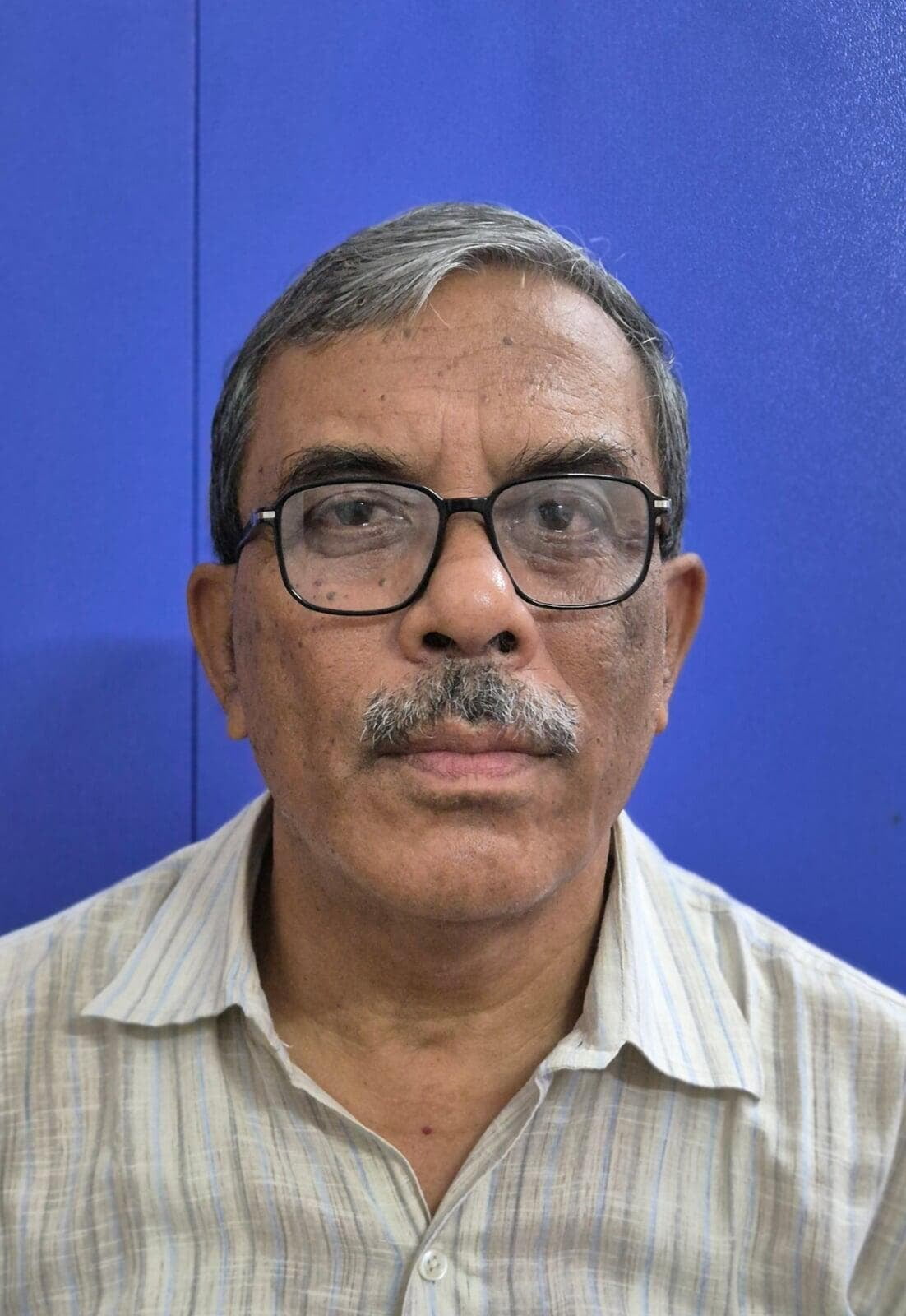
Amitava Sil